Physiotherapy & Holistic Wellness · Hong Kong
Sometimes it just needs the right guidance.
I'm a registered physiotherapist offering holistic bodywork consultation at Blissful Holistic Physiotherapy Centre in Jordan, Hong Kong.
I work with people dealing with persistent pain, old injuries, structural imbalances, scar adhesions, sluggish lymphatic flow, or the physical toll of emotional stress. Rather than treating symptoms in isolation, I look for the root cause.
More about my story →If your body has been carrying any of these, physiotherapy may be able to help. I work with the physical side of these concerns, alongside your own doctors — and where something needs medical diagnosis or treatment, I'll refer you on.
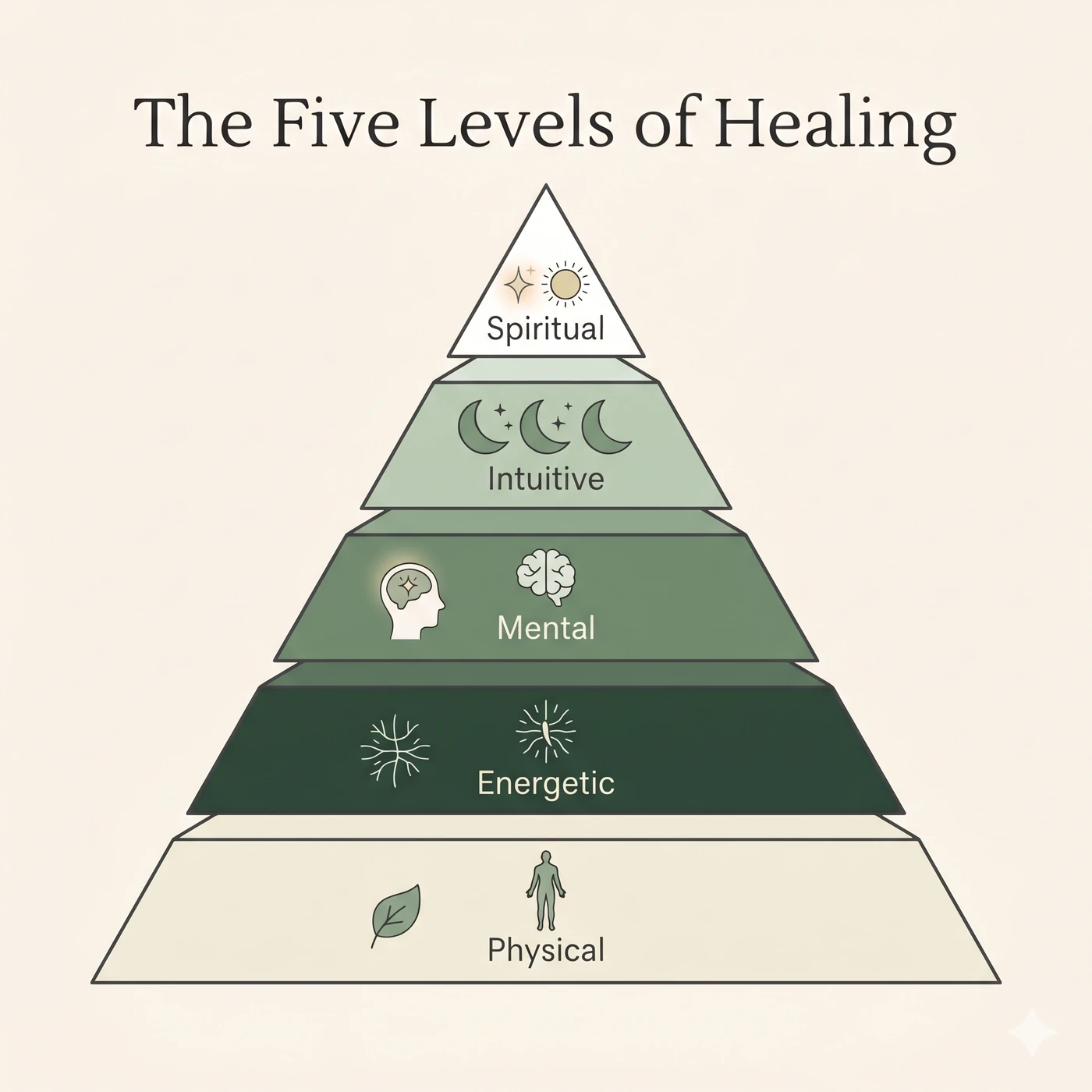
Rather than chasing symptoms, I look at why the body fell out of balance — guided by Dr. Klinghardt's work on the root causes of chronic illness.
Dr. Klinghardt developed this systematic model of healing in the 1980s, and it has since been widely used by holistic practitioners around the world. Looking at these levels can help us take a whole-person view and support the body through long-standing health challenges. Our wellbeing exists on different levels, and these levels are deeply interconnected.
On the physical level, we focus on the body's structure and function — addressing structural imbalances, nutritional deficiencies, and detox dysfunction. Structural therapy, exercise, and dietary therapy support this level.
The energetic level involves the autonomic nervous system, immune system, and other regulatory systems. Geopathic stress and electromagnetic fields affect this level. Therapies such as acupuncture and neural therapy help address these disturbances.
The mental level covers thoughts, beliefs, attitudes, and childhood memories. Unresolved traumatic experiences and stress can disrupt the flow of energy and nutrients in the body. By addressing psychological issues — using approaches such as homeopathy, psychotherapy, and Applied Psycho-Neurobiology (APN) — we can restore the body's overall function.
The intuitive level relates to the collective unconscious and the energy fields that can influence individuals and families. Intergenerational trauma may show up as illness or dysfunction.
The spiritual level is deeply personal and concerns our relationship with the sacred. It calls for self-exploration — beyond outside influence or treatment — yet plays an important role in our overall wellness.
Understanding how these levels interact helps us take a whole-person view. By caring for every level of our being, we can support the body in finding its way back toward balance, even when health challenges have been with us a long time.
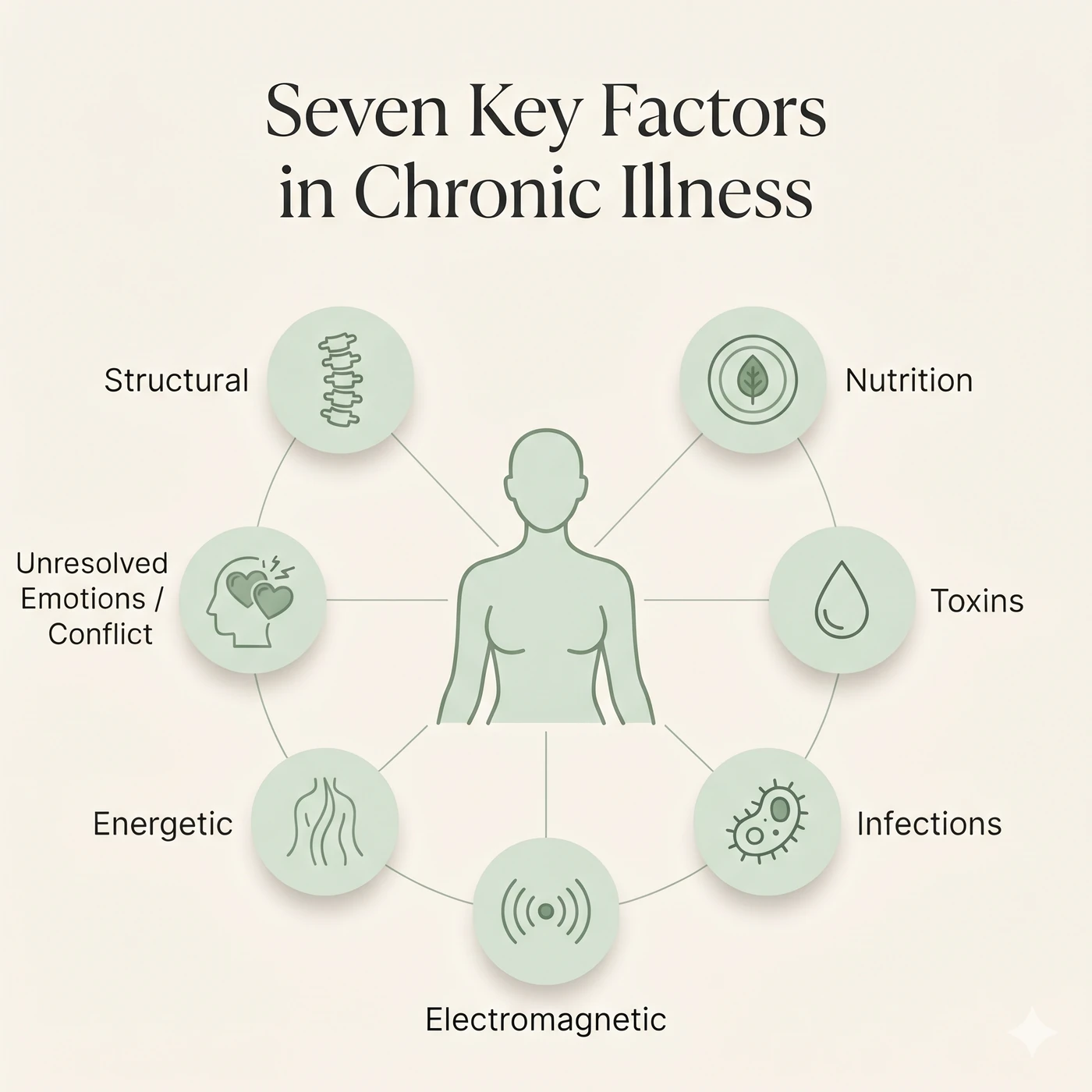
Dr. Klinghardt teaches that long-standing health challenges are often shaped by seven key factors together. When any of these is out of balance, the body can register it as a source of stress. Looking at them as a whole helps guide where support may be most useful.
Problems in the spine, jaw, and joints affect the health of the whole body.
Nutritional imbalances and excess toxin intake can trigger chronic inflammation.
Environmental toxins, heavy metals, and mould may be the root of the problem.
Hidden viral and other chronic infections are a common underlying factor.
Electromagnetic fields from devices and the power grid, along with geopathic stress, can disrupt cell function.
Blocked energy pathways — for example from scars — can lead to physical and emotional imbalance.
Long-held psychological trauma and stress can throw body and mind out of balance.
Comprehensive assessment and personalized treatment plan for first-time clients.
Deeper multi-layer healing for returning clients.
Structural alignment and meridian balancing.
No two sessions are the same — because no two bodies are. Each session draws from a tailored combination of these techniques:
Some of these are well-established physiotherapy techniques; others are complementary or holistic approaches with varying levels of scientific evidence. They are used to support your body's own healing, not as a cure, and how much each helps differs from person to person. They complement — and do not replace — medical care.
Gentle manual therapy that releases fascial tension and restores skeletal alignment and structural balance throughout the body.
Developed by Dr. Klinghardt — a muscle-testing biofeedback approach used to help explore possible stressors and areas of tension affecting the autonomic nervous system. It guides the session and is not a medical diagnostic test.
Developed by Dr. Klinghardt — combines meridian work with mental field therapy to release stored emotional patterns, stress, and trauma.
Developed by Dr. Klinghardt — uses muscle testing with guided eye positions and affirmations to gently work with emotional patterns and beliefs that may be held in the nervous system. It is a complementary approach and not a substitute for psychological or psychiatric care.
Precise micro-electrical frequencies are applied to specific tissues with the aim of supporting cellular repair, easing inflammation, and helping to reduce pain. Responses vary between individuals.
Developed by Dr. Chikly — gentle rhythmic techniques intended to support lymph flow, which may help reduce swelling and support the body's natural drainage and immune function.
Developed by Dr. Chikly — gentle hands-on work with the brain, cranial structures, and cerebrospinal fluid flow to support nervous-system regulation and recovery.
Developed by Dr. Chikly — works with the brain's reflex pathways to calm the nervous system, improve regulation, and support healing.
A rehabilitation approach based on developmental movement that retrains the brain's natural movement and core-stability patterns for efficient, pain-free function.
In a physiotherapy context, fine needles stimulate specific points to release tight muscles and trigger points, calm the nervous system, and prompt the body's own pain-relieving endorphins — restoring circulation and qi flow.
"Together, we'll uncover the source of what's holding your body back, and find the right combination of healing approaches to support it in returning to balance."
— Sarah