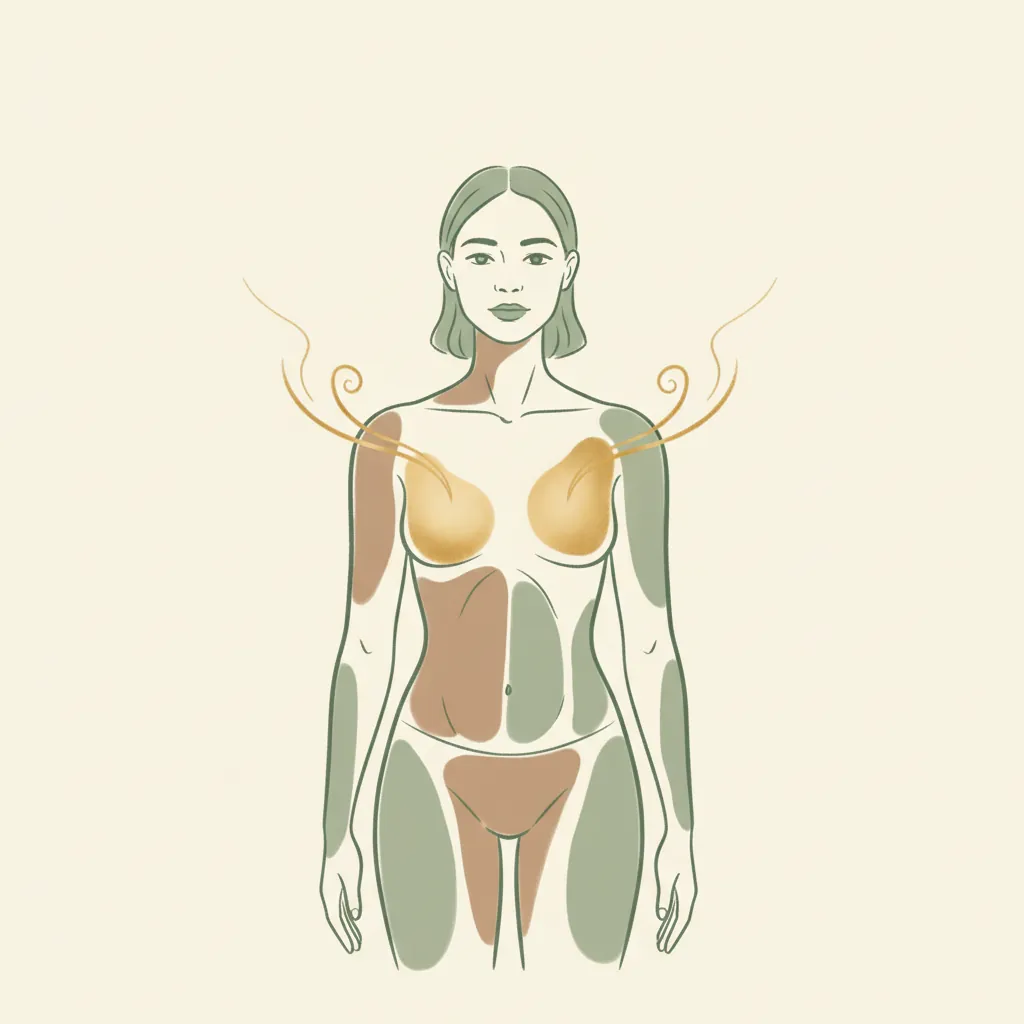
Sometimes a client comes in for a stiff shoulder, and partway through the session their eyes well up. Nothing "bad" has happened — the body has simply found a safe moment to let something go. If that's ever been you, you're not being fragile. You're being human.
The body keeps the score
Stress and unresolved emotion don't only live in the mind. The nervous system stores them as patterns — a jaw that won't unclench, shoulders that hover near the ears, a held breath, a gut that tightens before you've consciously noticed you're upset. Over time these patterns become the "default setting" of the body, long after the original event has passed.
This is the idea at the heart of psychiatrist Bessel van der Kolk's well-known work, summed up in the title of his book: the body keeps the score. When the mind cannot fully process an overwhelming experience, the body holds onto it — in muscle tone, posture, breath, and the set-point of the nervous system. Understanding this changed how a whole generation of clinicians thinks about pain that won't resolve.
In Dr. Klinghardt's model of healing, this is the mental level — the layer of thoughts, beliefs, and stored experiences. When it's carrying too much, it can quietly disrupt the flow of energy and even slow physical recovery, which is why a purely mechanical approach sometimes only takes a body so far.
Why the body holds on
None of this is a sign that something is wrong with you — it's the nervous system doing exactly its job. When an experience feels like too much, the protective "fight, flight, or freeze" response switches on, and if there's no chance to complete and discharge it, the body can stay subtly braced, as though the moment never fully ended. A held shoulder or a guarded belly is often an old act of self-protection that simply never got the signal to stand down.
What clients have noticed
One client discovered that the tension from an old injury was tangled up with emotions held in specific parts of the body — and that hands-on treatment mattered, but so did learning to work with himself. Another described "wow" moments of releasing burdens carried down from parents and ancestors: "The things you thought were yours, it turns out, aren't all yours." And one I'll always remember, when I gently said, "Your will is ready to process the emotion, but your body isn't there yet" — which became permission to be kinder to herself.
How we work with it — gently
Releasing stored emotion is never about forcing anything open. Alongside structural and manual work, I draw on approaches like Mental Field Therapy (MFT) and Applied Psycho-Neurobiology (APN) — both developed by Dr. Klinghardt — together with breathing and a slow, attentive pace. These methods use gentle muscle feedback and guided attention to help the nervous system find what it's holding and let it settle. I also draw on Dr. Bruno Chikly's gentle Brain Therapy, including the integration of the early "brain reflexes" we are born with: when these primitive reflexes stay switched on after stress or trauma, the nervous system can be held in a state of guarding — and gently helping them integrate can let the whole system finally come off high alert. You stay in control the whole time, and we only ever move as fast as your body feels safe to. Often, simply being met with safety is what allows the body to finally let go.
If a tension never quite resolves no matter how much you stretch or massage it, it may be holding more than muscle. And that's okay — there's a gentle way through.
References & further reading
- van der Kolk B. The Body Keeps the Score: Brain, Mind, and Body in the Healing of Trauma. New York: Viking; 2014.
- Levine PA. Waking the Tiger: Healing Trauma. Berkeley: North Atlantic Books; 1997.
- Porges SW. The Polyvagal Theory: Neurophysiological Foundations of Emotions, Attachment, Communication, and Self-Regulation. New York: Norton; 2011.
- Klinghardt D. The Five Levels of Healing and the Seven Factors. Klinghardt Academy.
- Chikly B. Brain Therapy & the integration of brain reflexes. Chikly Health Institute. chiklyinstitute.com.
For education only, and not medical advice. This article describes a complementary, body-based approach and is not a substitute for psychotherapy or mental-health care. If you are in distress, please reach out to a qualified professional.